
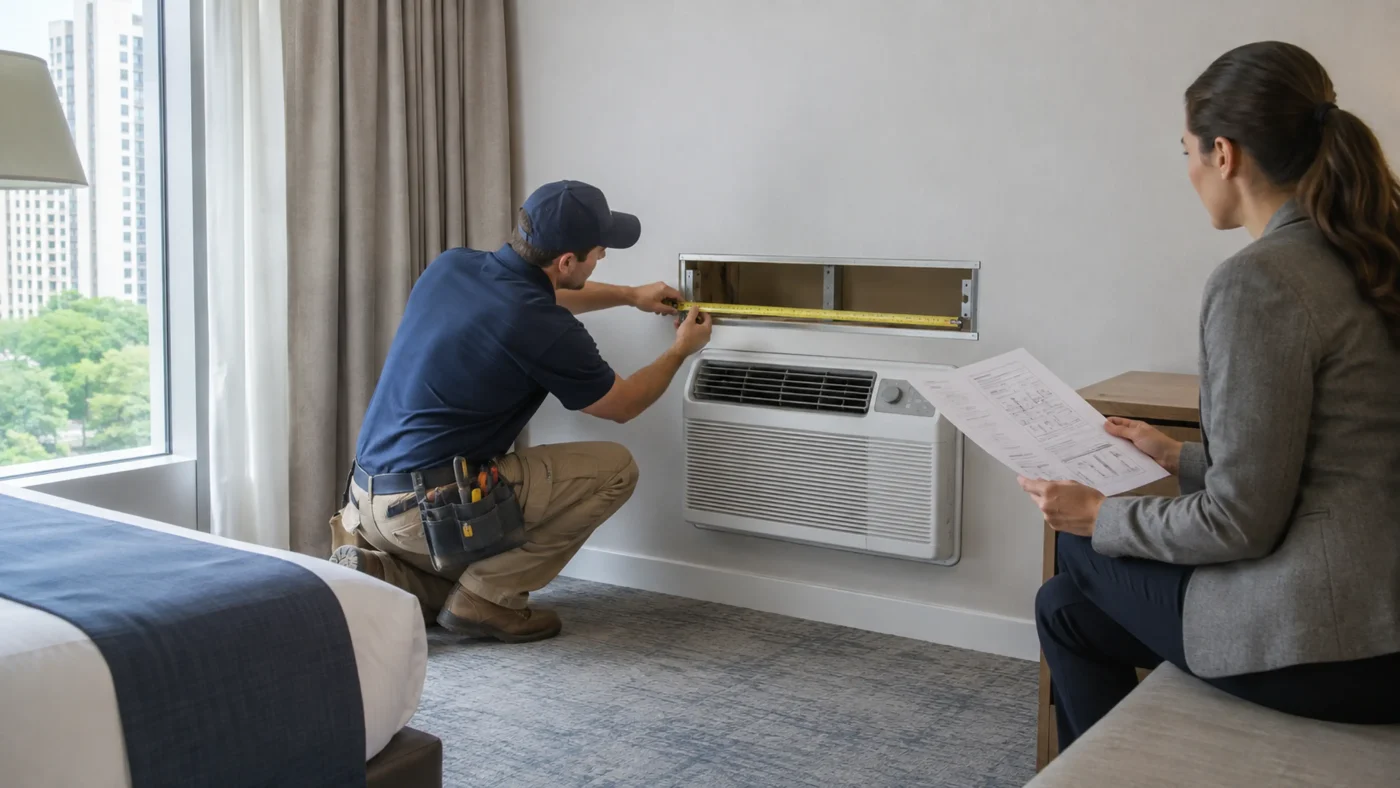
A wall air conditioner can be a practical choice for apartments, hotel rooms, offices, shops and property projects where a permanent through-wall installation is acceptable. The correct order depends on more than cooling capacity because the opening, sleeve, drainage, voltage and exterior clearance must all work together.
Quick answer: It is a self-contained room air conditioner designed for installation through a prepared wall opening or compatible sleeve. Buyers should confirm equipment compatibility, local requirements, technical documentation and total supply terms before making a final decision.
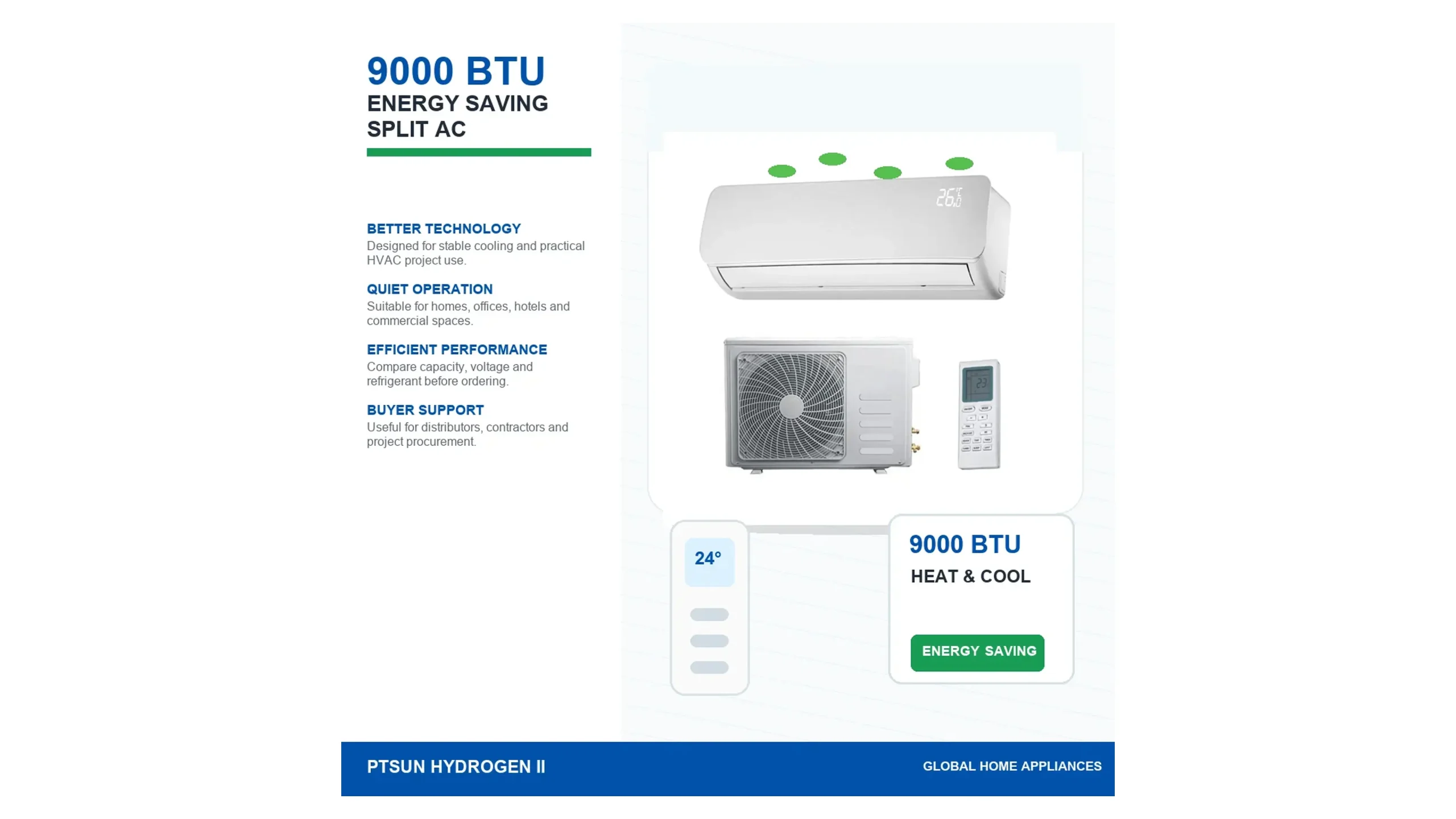
This guide compares the wall air conditioner with window and split options. It explains what buyers should check when searching for a through the wall air conditioner, in wall air conditioner or wall unit air conditioner for one room, resale stock or a larger installation project.
How a Wall Air Conditioner Differs From a Window Unit
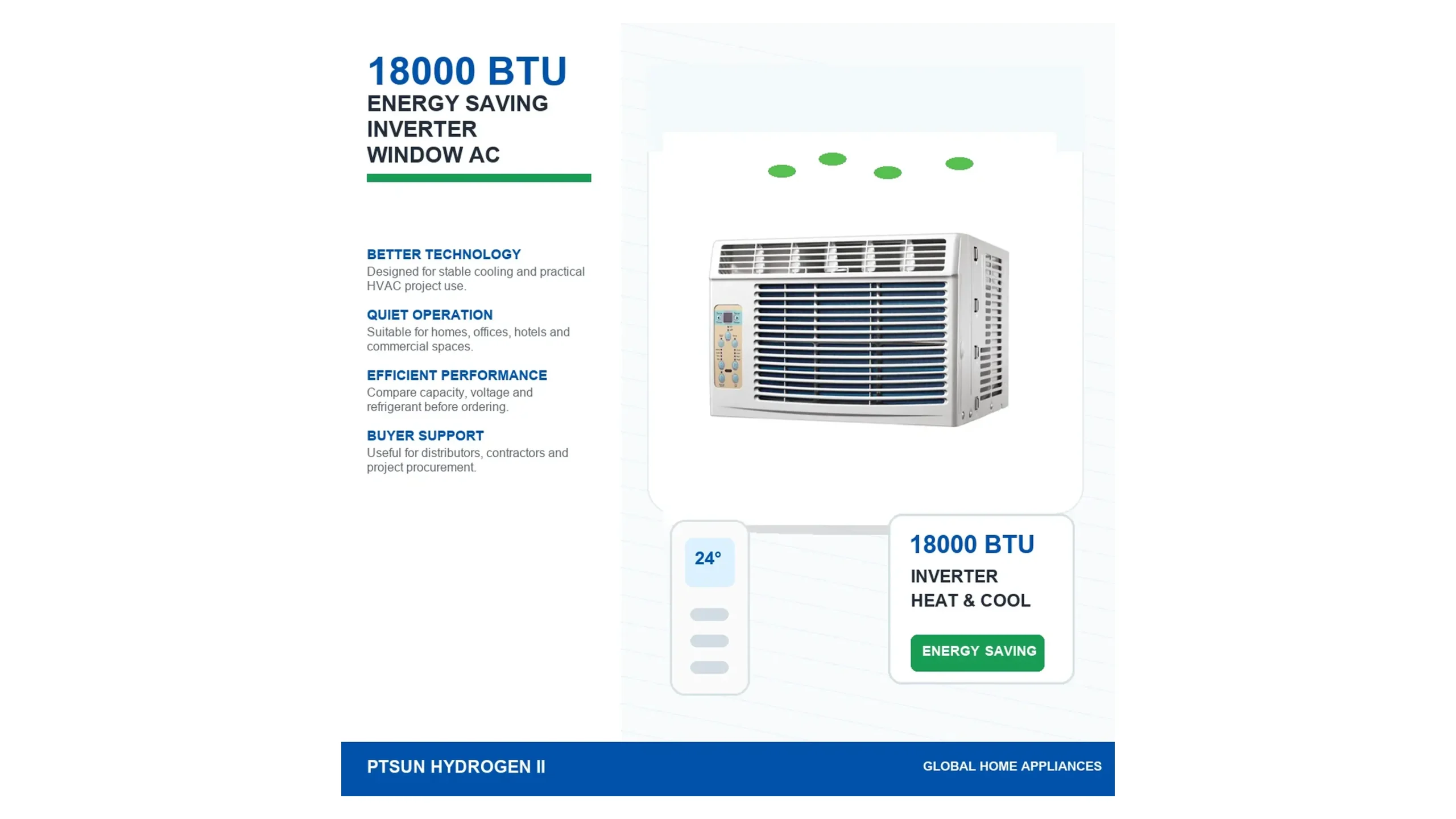
A through-wall model is intended for a prepared wall opening or sleeve. A window unit normally relies on a window frame and may use side vents that must remain clear. Placing the wrong design in a wall can restrict airflow and create service problems.
Before buying a wall air conditioner, request the chassis dimensions, sleeve requirement, ventilation pattern, drainage arrangement and minimum clearances. The installer should confirm the wall structure and weather sealing method.
8 Practical Checks Before You Order
- Measure room area, ceiling height and heat exposure.
- Confirm the finished wall opening and sleeve dimensions.
- Check side and rear ventilation requirements.
- Select BTU capacity for the real cooling load.
- Confirm voltage, frequency, plug and circuit requirements.
- Compare cooling-only and heat-and-cool functions.
- Review noise, efficiency, drainage and maintenance access.
- For bulk orders, confirm packaging, spares, warranty and repeat availability.
Wall Air Conditioner Capacity and Efficiency
An undersized unit can run continuously without reaching comfort. An oversized unit may cool quickly but control humidity poorly. Room area is only a starting point; sunlight, insulation, occupancy and internal equipment change the load.
Efficiency labels should be compared using the metric required in the destination market. For hotel and project orders, calculate operating hours across all rooms instead of comparing purchase price alone.
Installation and Efficiency References
The US Department of Energy room-air-conditioner page explains the regulated product category. Buyers can also review DOE room AC guidance and ENERGY STAR product information. Local electrical and building codes still apply.
Wall Air Conditioner Products and Quotations
Compare the wholesale air conditioner range, review installation guidance, check energy-efficiency information, and use the contact page for a specification-led quotation.
Include room schedule, quantities, wall details, voltage, target capacity, function and destination. A project quotation is more useful when the installer and buyer work from the same specification.
Room Survey and Order Planning
A room survey should record usable wall area, opening restrictions, sun exposure, ceiling height, insulation, occupancy, heat-producing equipment and the location of the electrical supply. In hotels and apartments, buyers should also note quiet-hour expectations, condensate routing, facade rules and access for future filter cleaning. These points affect both capacity selection and the true installation cost, even when two units carry a similar cooling rating.
For multiple rooms, create a schedule showing room number, floor, orientation, measured dimensions, required voltage, preferred control method and installation type. Separate standard rooms from larger corner rooms, kitchens, shops or technical spaces. The schedule lets suppliers quote the correct mix of capacities and helps contractors estimate brackets, piping, cable, drainage and lifting requirements without relying on one typical room.
Commercial buyers should request carton dimensions, unit weight, loading quantity, warranty terms, spare-parts support and sample approval before a large order. Confirm whether remote controls, wall sleeves, brackets, drain accessories and interconnecting materials are included. A small pilot installation can reveal noise, airflow, condensate and service-access issues before the balance of a hotel, residential or resale order is released.
Related Buyer Guide
Read the BTU to watts guide for the next comparison in this topic cluster.
Frequently Asked Questions
What is a through-wall AC?
It is a self-contained room air conditioner designed for installation through a prepared wall opening or compatible sleeve.
Is a wall air conditioner the same as a window AC?
Not always. Vent placement and mounting requirements can differ, so the manufacturer installation method must be followed.
How do I size a wall unit air conditioner?
Use room load, climate, insulation, sunlight, ceiling height, occupancy and equipment heat, not floor area alone.
Does a through-wall AC need a sleeve?
Many models do. Confirm the approved sleeve, finished opening and weather-sealing requirements before ordering.
Can a window unit be installed through a wall?
Only when the manufacturer permits it and all ventilation openings remain clear.
Is a wall AC suitable for hotel rooms?
Yes when capacity, noise, controls, maintenance access and exterior appearance meet the project requirements.
Does a through-wall unit need drainage?
Designs vary. Confirm condensate handling and wall slope in the installation instructions.
What voltage should I order?
Use the voltage and frequency available at the property and confirm circuit requirements with a qualified electrician.
What should wholesalers compare?
Compare dimensions, capacity, voltage, efficiency, packaging, warranty, spare parts and repeat supply.
What information is needed for a project quote?
Send room quantities, dimensions, climate, wall construction, electrical supply, destination and delivery schedule.
Request a Wall Air Conditioner Quote
Send the wall air conditioner capacity, quantity, destination, voltage and opening requirements. For hotels and projects, include a room schedule so suitable product options can be reviewed.
