
Choosing the right air conditioner supplier is an important decision for wholesalers, importers, contractors, retailers, hotel buyers, and project procurement teams. In B2B trade, the buyer is not only looking for one unit. The real question is whether the supplier can support stock planning, product selection, commercial communication, delivery expectations, and after-sales confidence.
Ptsun Hydrogen II works with buyers who need practical HVAC and home appliance supply information before requesting a quote. This guide explains what a serious buyer should check before choosing a supplier for wholesale air conditioners, project cooling needs, or resale channels.
Why Supplier Choice Matters in B2B Air Conditioning
A commercial buyer needs more than a low price. The wrong supply decision can create problems with voltage, refrigerant, packaging, delivery timing, warranty handling, and customer complaints. A reliable air conditioner supplier should help the buyer understand product suitability before an order is confirmed.
For distributors and resellers, a product must fit local demand. For contractors, it must fit the installation environment. For hotel or property buyers, the equipment must match room size, operating hours, and service expectations. This is why product pages should include technical details, application notes, and clear enquiry guidance.
Check Product Range Before Requesting Price
Before comparing prices, review whether the supplier has the right product categories for your market. A buyer may need split air conditioners, standing air conditioners, window air conditioners, air coolers, air purifiers, dehumidifiers, or refrigerant gas.
A strong catalogue makes it easier to compare options by cooling capacity, voltage, refrigerant, function, installation type, and target buyer. If your market sells both residential and commercial cooling products, a wider catalogue can also support repeat orders and better seasonal planning.
Confirm Technical Details Early
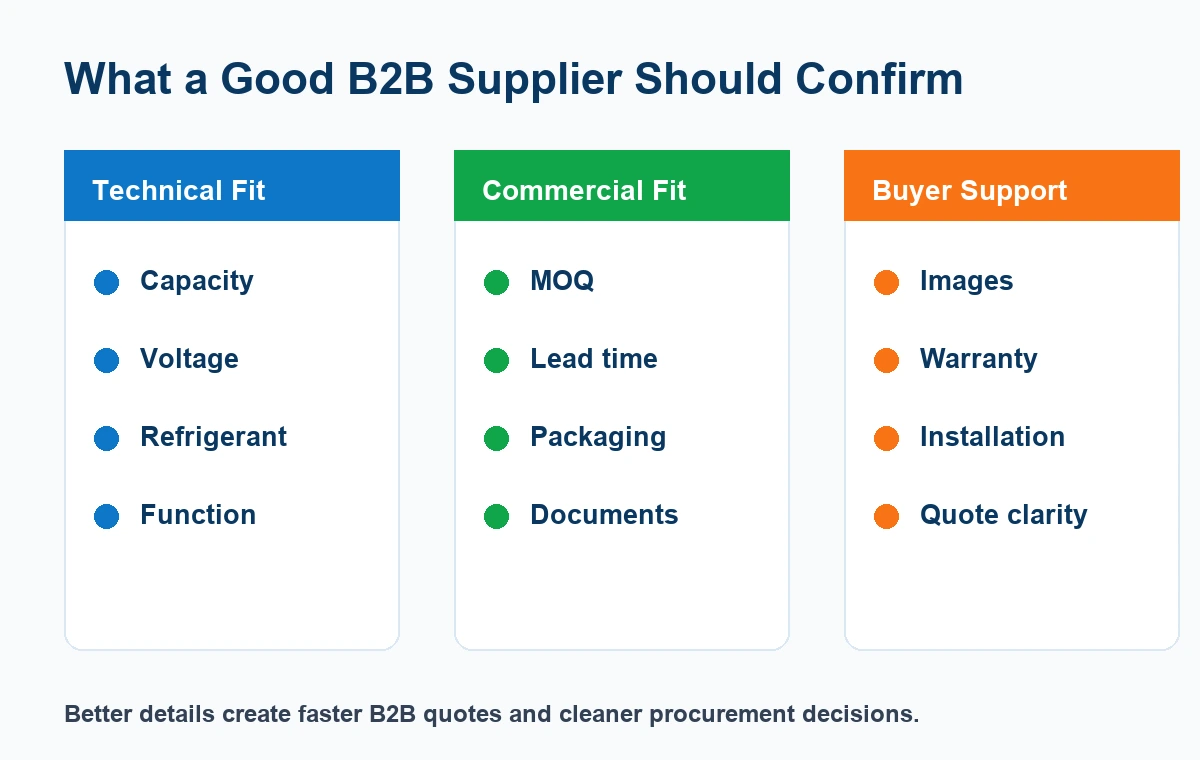
Technical mismatch is one of the biggest causes of purchasing delays. Before placing a wholesale order, confirm the capacity, voltage, frequency, refrigerant type, plug requirement, cooling or heating function, and installation method. For example, a buyer reviewing an inverter split AC should confirm whether the model is suitable for the destination climate, customer expectation, and service network.
Energy use is another important point. Buyers can review general guidance from the U.S. Department of Energy air conditioning guide and ENERGY STAR room air conditioner guidance. These resources are useful for background understanding, while the final product choice should always be confirmed with supplier documentation.
Ask for Commercial Supply Information
A professional supplier should be able to discuss order quantity, availability, packaging, delivery country, payment terms, product images, technical files, and after-sales expectations. For project buyers, the enquiry should include site use, room size, expected operating hours, and whether the product is for one project or repeat purchasing.
When contacting an air conditioner supplier, avoid sending only “price please.” A better enquiry includes product name, quantity, destination country, voltage, refrigerant preference, order timeline, and buyer type. This helps the supplier respond with a more useful commercial answer.
Review Warranty, Installation, and Support Pages
Product supply does not end when the price is confirmed. Buyers should review the supplier’s warranty information, installation support, energy efficiency guide, and FAQ page. These pages help buyers understand how the business handles practical questions before and after purchase.
For importers and wholesalers, support information can also help sales teams answer customer questions. For contractors, it helps avoid incorrect product selection. For hotels, offices, and property buyers, it helps match the product with long-term operating needs.
Compare Supplier Communication Quality
Good B2B communication is a business advantage. A supplier should ask relevant questions, clarify missing details, and avoid making vague promises. If your order involves several models, ask the supplier to confirm each product clearly so your procurement team can avoid confusion.
Buyers should also check whether the supplier can support repeat communication, quotation updates, and product clarification. A mature trading relationship depends on clear information from both sides, especially when the order is for resale, tender supply, contractor work, or seasonal stock planning.

Useful External Resources for HVAC Buyers
For extra background before a wholesale or project purchase, buyers can review independent technical and regulatory resources. The ASHRAE technical resources are useful for HVAC system knowledge, while the EPA Section 608 refrigerant guidance helps buyers understand refrigerant handling and compliance topics. European buyers can also review the European Commission energy-efficient products information for energy label and ecodesign background.
For B2B buyers, an air conditioner supplier should make product comparison easier by giving clear answers on capacity, model type, market suitability, documentation, and delivery expectations.
A serious air conditioner supplier should also understand the difference between retail stock, contractor supply, hotel procurement, and project-based purchasing, because each buyer group needs a different level of technical and commercial support.
When the air conditioner supplier communicates clearly before the order, buyers can reduce mistakes, compare models faster, and prepare more accurate quotations for their own customers.
The right air conditioner supplier should help a buyer move from product interest to a clear enquiry with fewer missing details.
For long-term B2B supply, choose an air conditioner supplier that can support repeat communication, realistic availability checks, and practical product information.
Final Buying Checklist
- Confirm the product category and exact model requirement.
- Check capacity, refrigerant, voltage, frequency, and function.
- Prepare quantity, destination country, and preferred delivery details.
- Ask for available product images, technical files, and packaging notes.
- Review warranty, installation, and energy efficiency information.
- Send a clear enquiry through the contact page.
For buyers building a serious HVAC or appliance supply channel, the best supplier is not only the cheapest option. The best partner is the one that helps you choose the right product, understand the commercial details, and move from product review to a clear purchasing conversation.
Browse the Ptsun Hydrogen II product catalogue or contact the team with your product requirement, quantity, destination country, and technical needs.
