

Understanding refrigerant types helps homeowners, technicians and commercial buyers ask better questions, but a list should never be treated as permission to substitute one product for another. Each system is engineered for a particular refrigerant, charge, lubricant, pressure range and safety classification.
Quick answer: Common families include HFC and HFO blends, hydrocarbons, carbon dioxide and legacy HCFC products. Buyers should confirm equipment compatibility, local requirements, technical documentation and total supply terms before making a final decision.
This guide compares common AC refrigerant types and refrigeration options, including legacy products and newer lower-GWP choices. It explains applications, safety considerations and the details importers, distributors and project buyers should confirm before ordering equipment or gas.
Why Refrigerant Types Cannot Be Interchanged Freely
Refrigerants differ in composition, pressure-temperature behaviour, flammability, lubricant compatibility and environmental regulation. Similar operating pressures do not make two products equivalent.
Always use the equipment nameplate, manufacturer literature and qualified technical assessment. A replacement may require engineering changes, new controls, relabelling and compliance review.
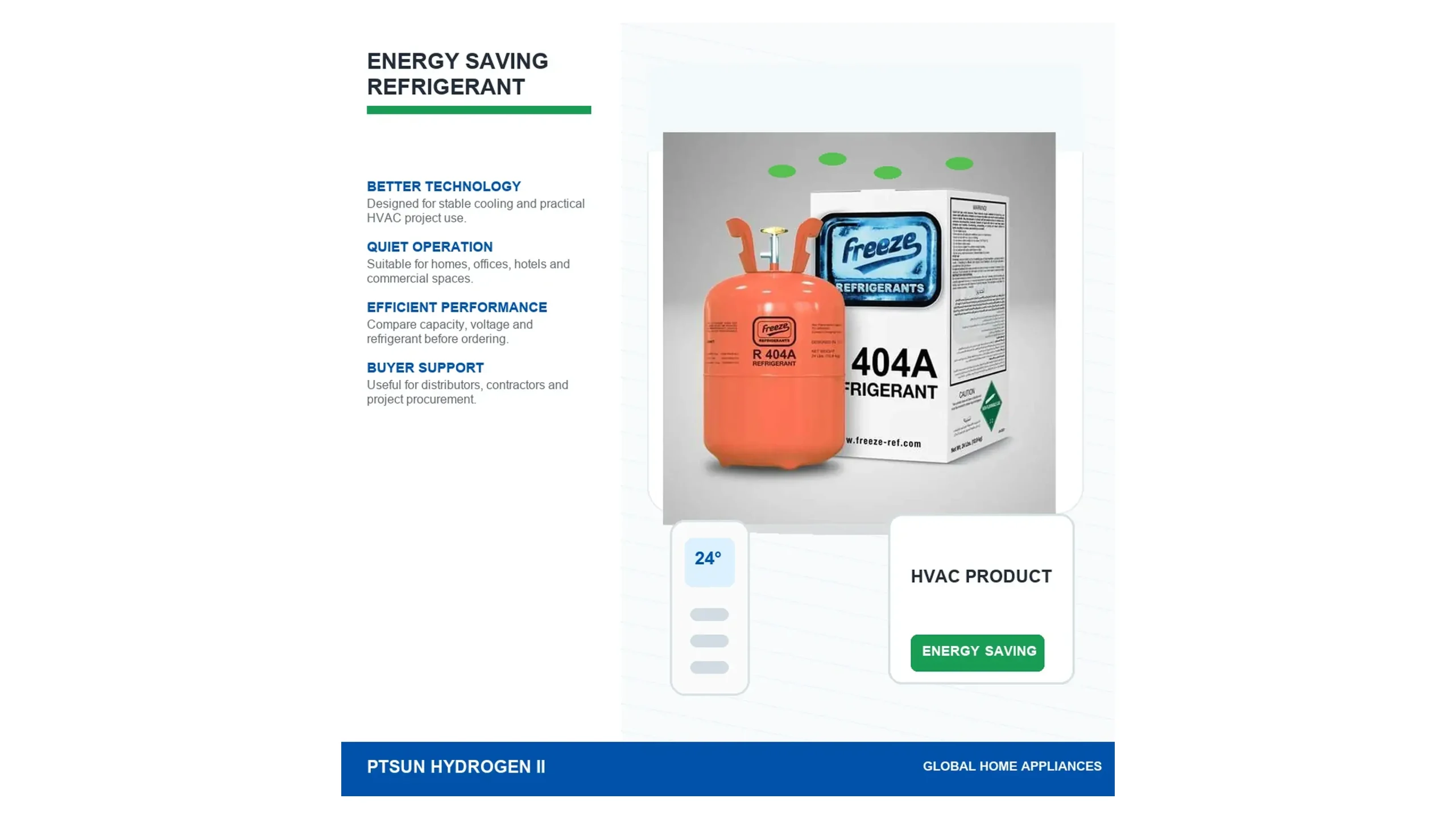
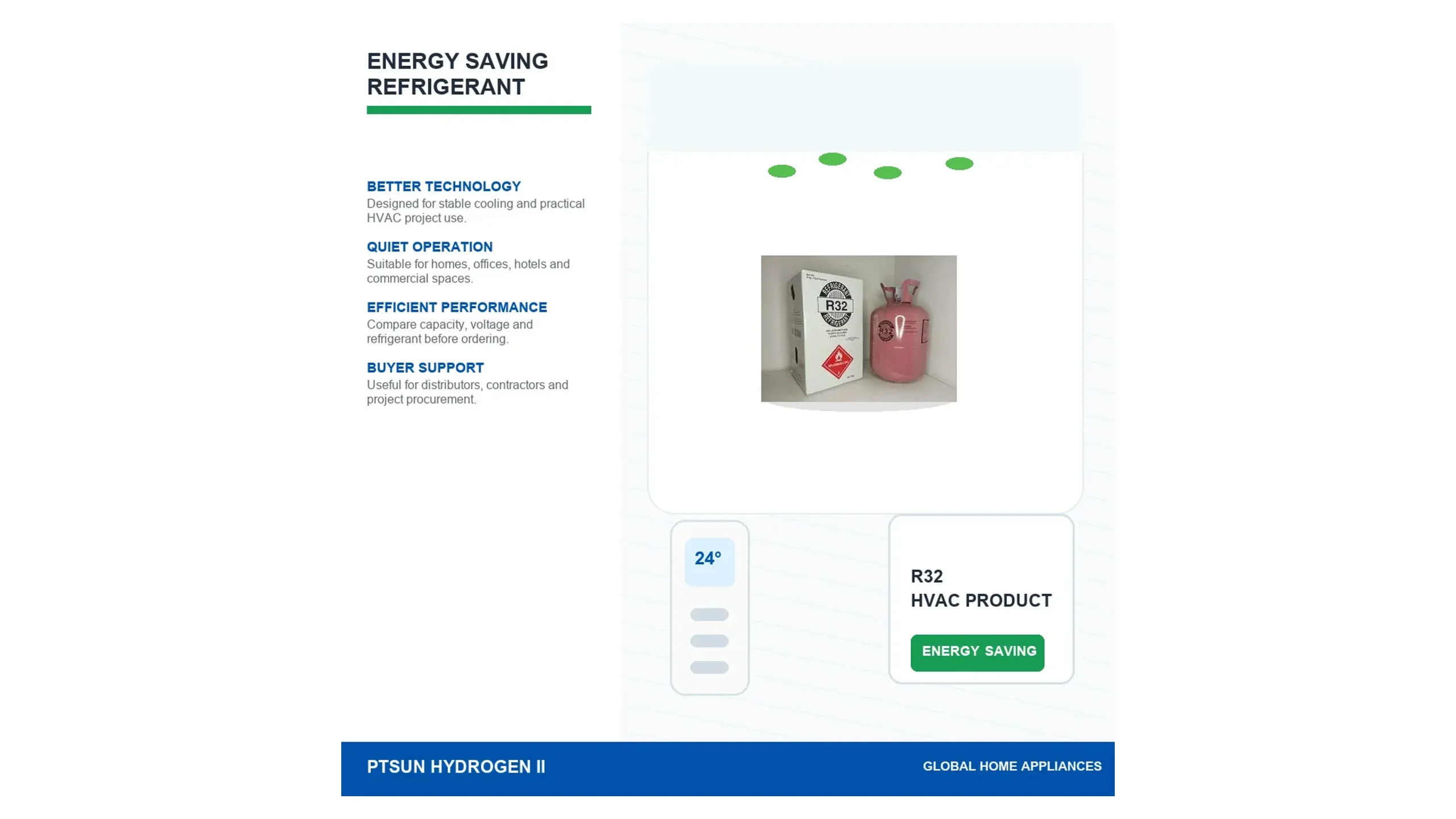
10 Refrigerant Types Buyers Commonly Encounter
- R22 in legacy air-conditioning and refrigeration equipment.
- R410A in many existing comfort-cooling systems.
- R32 in selected modern air conditioners and heat pumps.
- R454B in selected lower-GWP comfort-cooling equipment.
- R134a in selected refrigeration, appliance and mobile applications.
- R404A in legacy commercial refrigeration systems.
- R407C in selected comfort cooling and approved retrofit plans.
- R290 in approved hydrocarbon refrigeration equipment.
- R600a in many modern refrigerators and small appliances.
- Carbon dioxide R744 in specialized commercial and industrial systems.
Safety Classes and Lower-GWP Transitions
Safety classifications describe toxicity and flammability characteristics. Products such as R32 and R454B may be A2L, while R290 and R600a are A3. These categories affect equipment design, tools, training, ventilation and permitted charge.
Environmental rules are moving markets toward lower-GWP refrigerant types, but timelines vary by country and sector. Existing equipment may continue to require legacy service products under specific rules.
Authoritative Refrigerant Information
Use EPA SNAP substitute listings, EPA sector restrictions, European Commission F-gas information and ASHRAE standards resources.
Compare Refrigerant Types Before a Commercial Order
Explore the wholesale refrigerant gas category, compare available products in the full catalogue, review shipping and return information, and send the sales team the refrigerant, quantity, cylinder preference and destination country.
Include the equipment model, installed refrigerant, intended market, quantity and qualified receiving party. This keeps product supply separate from unapproved substitution advice.
Build a Refrigerant Register for Each Site
Commercial owners benefit from a register listing every system, location, model, serial number, charge, safety classification, service contractor and last maintenance date. Add the applicable leak-check, recovery and recordkeeping requirements for the country. This prevents incompatible stock from being moved between systems and helps procurement teams forecast service demand without holding unnecessary cylinders.
When new equipment is compared, review climate performance together with efficiency, safety controls, technician availability, component support and end-of-life obligations. A product with a lower climate metric is not automatically suitable for every occupied room, cold store or industrial process. The approved equipment design and local rules decide what can be installed, while the service network determines whether it can be maintained responsibly throughout its working life.
Review the register during purchasing and scheduled maintenance so obsolete, unidentified or unnecessary stock can be managed responsibly.
Related Buyer Guide
Read the R454B refrigerant guide for 2026 for the next comparison in this topic cluster.
Frequently Asked Questions
What are the main refrigerant types?
Common families include HFC and HFO blends, hydrocarbons, carbon dioxide and legacy HCFC products.
Which refrigerant is used in home air conditioners?
It depends on equipment age and design. R410A, R32 and R454B are examples, but the nameplate is decisive.
Which refrigerant is used in refrigerators?
Many modern refrigerators use R600a, while equipment age and market determine the actual product.
Are all refrigerant types interchangeable?
No. Equipment design, pressure, lubricant, safety controls and legal approval differ.
What does A2L mean?
It indicates a lower-toxicity refrigerant with mild flammability under the applicable safety classification.
What does A3 mean?
It indicates a lower-toxicity but higher-flammability refrigerant such as R290 or R600a.
Which refrigerant has the lowest GWP?
Some natural refrigerants have very low GWP, but suitability depends on equipment, safety and regulation.
Can an old refrigerant be replaced?
Sometimes, but only through an equipment-specific approved retrofit or replacement plan.
What should distributors confirm?
Confirm product identity, purity, cylinder, safety data, transport classification, destination rules and customer application.
How do buyers choose the right refrigerant?
Start with the equipment nameplate and manufacturer documentation, then confirm local rules and qualified handling.
Compare Refrigerant Gas Supply Options
Send the required refrigerant types, quantity, cylinder preference, destination and equipment application. We will review available product and quotation information without treating different refrigerants as interchangeable.

