

407C refrigerant is an HFC blend used in selected air-conditioning and heat-pump systems. It is also discussed in retrofit planning for some legacy R22 equipment, which makes technical compatibility more important than choosing a product by price or pressure alone.
Quick answer: R407C is an HFC blend used in selected air conditioners and heat pumps and considered in some approved retrofit plans. Buyers should confirm equipment compatibility, local requirements, technical documentation and total supply terms before making a final decision.
This guide explains R407C applications, the R407C PT chart, pressure-temperature behaviour and common questions such as whether 407C refrigerant can replace R22. It is written for owners, HVAC contractors, importers, distributors and project buyers preparing a supply or service decision.
What Is 407C Refrigerant?
R407C combines several HFC components and has operating characteristics used in selected comfort-cooling equipment. Because it is a zeotropic blend, technicians must account for temperature glide and use the correct bubble or dew reference for the measurement being taken.
The equipment nameplate and manufacturer documentation remain the first authority. A 407C refrigerant order should state the intended system, quantity, cylinder requirement and destination.
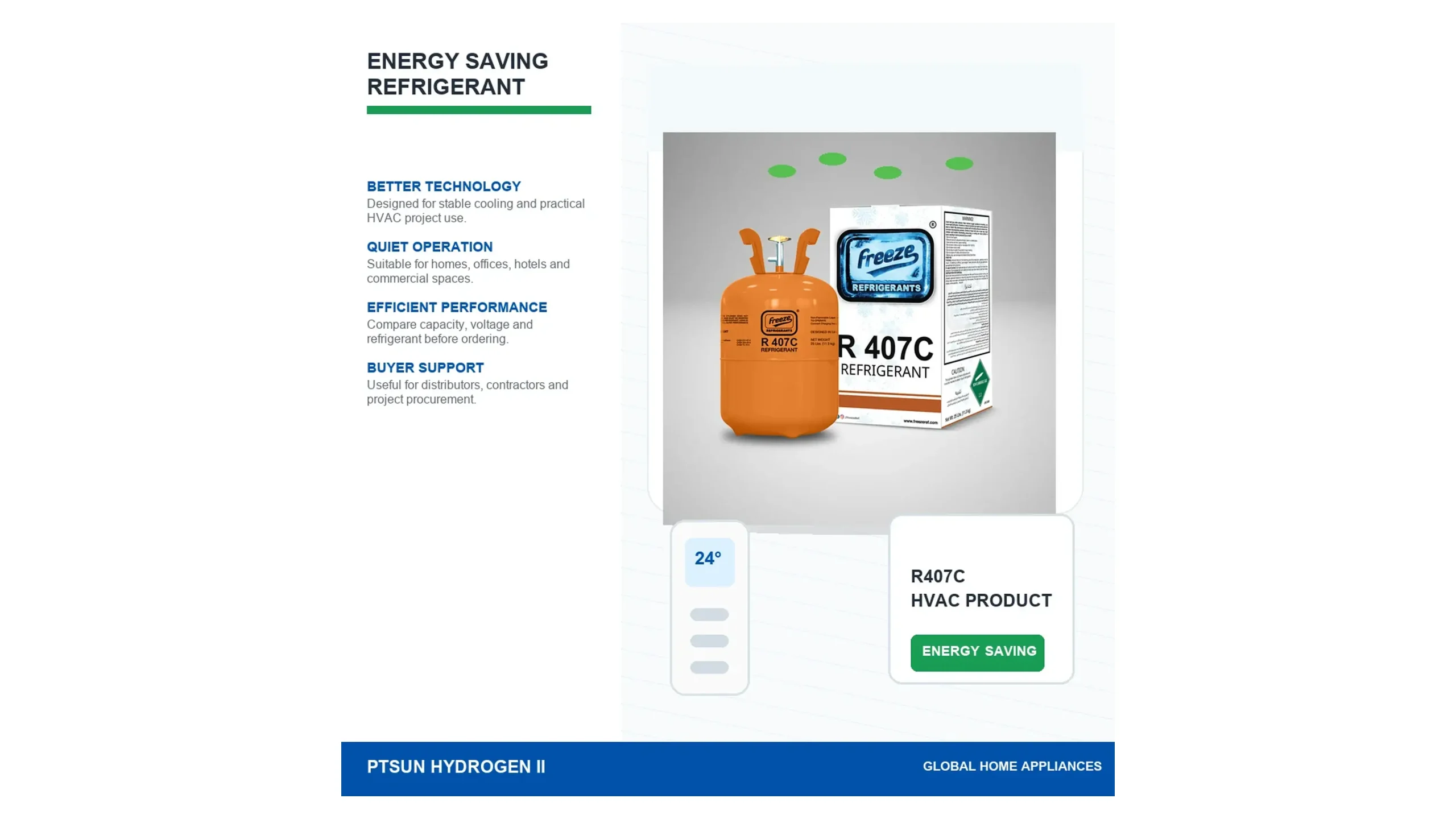
7 Reliable Buyer and Retrofit Checks
- Confirm the installed refrigerant and complete model number.
- Review manufacturer approval for R407C or any retrofit procedure.
- Assess lubricant, seals, expansion device and operating envelope.
- Use the correct R407C pressure-temperature references.
- Request purity, cylinder, valve and safety information.
- Compare product, freight and destination compliance together.
- Document commissioning and labelling after an approved retrofit.
R407C PT Chart, Pressure and Temperature Glide
An R407C PT chart may show bubble and dew values because the blend changes phase across a temperature range. Trained technicians select the appropriate reference when evaluating superheat, subcooling or saturation conditions.
A single 407C refrigerant pressure reading is not enough to diagnose a system. Airflow, load, ambient conditions, line temperatures and manufacturer data must also be considered.
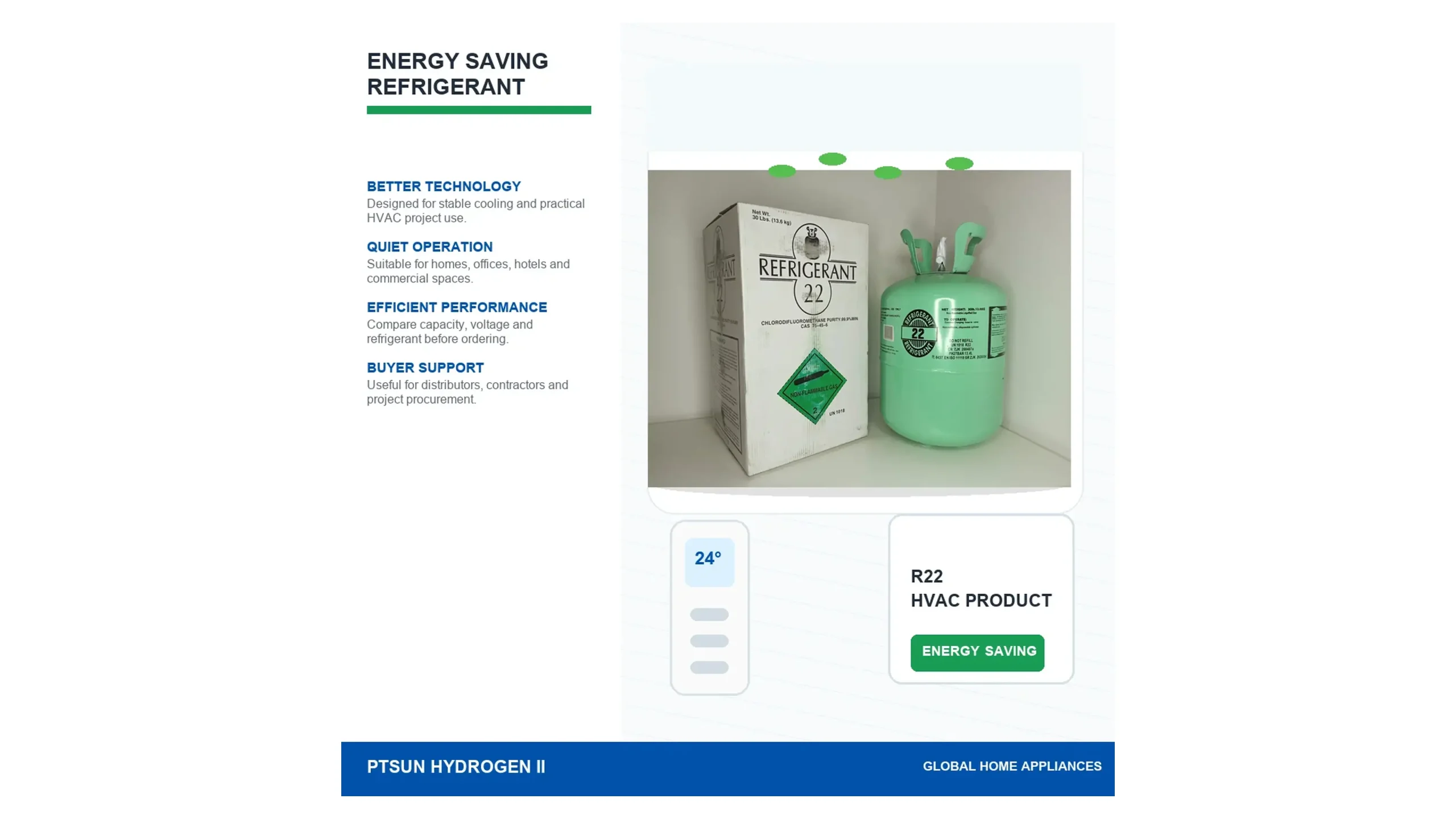
Can 407C Replace R22?
R407C can be part of an approved retrofit plan for some R22 equipment, but it is not a universal drop-in. Capacity, oil return, elastomers, metering devices and controls must be evaluated. Review EPA R22 purchasing and repair guidance, EPA SNAP substitutes and ASHRAE technical resources.
407C Refrigerant Supply Information
Explore the wholesale refrigerant gas category, compare available products in the full catalogue, review shipping and return information, and send the sales team the refrigerant, quantity, cylinder preference and destination country.
For retrofit-related enquiries, add the equipment model, current refrigerant, compressor condition, lubricant and the technician’s approved work plan.
Retrofit Records and Commercial Comparison
A retrofit quotation should state the existing system condition, proposed product, lubricant work, seals or components to be changed, recovery method, evacuation target, charging procedure and commissioning checks. Because this blend has temperature glide, the contractor should use the appropriate dew or bubble data for the measurement being taken and follow the equipment or retrofit guidance. Final records should include charge weight and stable operating readings.
Procurement teams should compare downtime, labour, parts, energy performance, future service availability and remaining equipment life alongside the refrigerant cost. For a fleet of rooftop units or split systems, a trial conversion on one representative machine can provide useful operating evidence before a larger programme is approved. Where manufacturer support is unavailable, replacement equipment may carry less operational risk than an improvised conversion.
Related Buyer Guide
Read the R22 refrigerant replacement guide for the next comparison in this topic cluster.
Frequently Asked Questions
What is 407C refrigerant?
R407C is an HFC blend used in selected air conditioners and heat pumps and considered in some approved retrofit plans.
Is 407C a replacement for R22?
It can be suitable for some systems under an approved retrofit procedure, but it is not a universal drop-in replacement.
Does R407C have temperature glide?
Yes. Technicians must use the correct bubble or dew reference for the measurement being evaluated.
What is an R407C PT chart?
It is a pressure-temperature reference that may provide separate bubble and dew values for the blend.
Can R407C be mixed with R22?
Do not mix refrigerants unless a manufacturer-approved procedure specifically directs it.
Does an R407C retrofit require an oil change?
It may. Lubricant compatibility and oil return must be assessed for the exact equipment.
What affects 407C refrigerant price?
Quantity, cylinder format, supply, freight, destination and documentation affect the commercial quote.
How should R407C be charged?
Qualified technicians should follow manufacturer guidance for charging a zeotropic blend and use correct service equipment.
What documents should buyers request?
Ask for product specification, safety data, net weight, packaging, origin and transport documents.
What information is needed for a quote?
Send quantity, destination, application, cylinder preference, delivery timing and whether a retrofit is involved.
Request a 407C Refrigerant Supply Review
Send the 407C refrigerant quantity, destination, cylinder preference and intended equipment. Retrofit enquiries should include the complete system model and qualified technician assessment.

